






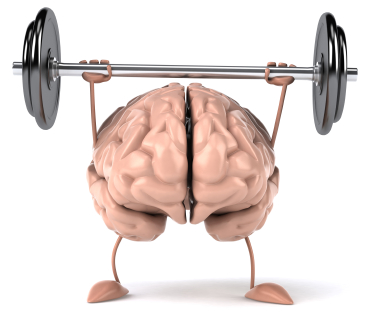
"Your Brain is a Muscle"
Understanding Neuroplasticity and How You Can Get Smarter Every Day.

Did you know your brain physically changes when you learn? Discover the science of neuroplasticity and why struggling with a problem actually makes you smarter.
Have you ever looked at a "smart" student in your class and thought, "They were just born that way, and I wasn't"?
It is one of the biggest myths in education. We often treat intelligence like shoe size—a fixed number that you are stuck with for life. But modern neuroscience has proven this wrong. Your brain isn’t a hard drive with a fixed amount of storage; it is more like a muscle. And just like a bicep or a hamstring, it grows stronger, denser, and more capable the more you exercise it. This concept is called Neuroplasticity.
What is Neuroplasticity?
Neuroplasticity is your brain's ability to reorganize itself by forming new neural connections.
Think of your brain like a dense forest. If you walk through the forest once, you leave a faint trail of bent grass. If you never walk that path again, the grass grows back, and the trail disappears. But if you walk that same path every day, the grass gets trampled, the dirt packs down, and eventually, you have a wide, permanent road that is easy to travel.
Learning works the exact same way. When you learn something new—whether it’s a math formula, a coding language, or how to paint—neurons in your brain fire together. At first, the connection is weak (the faint trail). But with repetition and practice, that connection becomes a superhighway.
Why "Easy" is the Enemy of "Smart"
Here is the secret that most students don’t know: If you aren't struggling, you aren't learning.
When you breeze through a quiz and get 100% without trying, your brain is just reciting what it already knows. It’s like lifting a weight that is too light; it won't build muscle. To trigger neuroplasticity, you need to operate at the edge of your ability.
When you make a mistake and feel that frustration, your brain releases chemicals that signal it needs to adapt. That specific moment of "I don't get this" is actually the moment your brain starts building the infrastructure to get smarter.
3 Ways to Build Your Brain at Quriosity
How do we turn this science into a daily habit? Here is the formula:
1. Seek the Challenge: Don’t shy away from the difficult questions in our modules. If a question makes you stop and think, that is good. That pause is your brain "lifting the heavy weight."
2. Embrace the "Not Yet": You aren't "bad at math"; you just haven't strengthened those neural pathways yet. Add "yet" to every sentence where you doubt your ability.
3. Rest to Retain: Believe it or not, the actual wiring of the brain happens while you sleep. High-quality sleep is when your brain cements the new pathways you paved during the day.
The Takeaway:
You are the architect of your own intelligence. Every time you push through a difficult problem on Quriosity, you aren't just finding an answer—you are physically upgrading your brain.
More from Curiosity Captain
Design Your Future: How Kids ...
13 Dec 2025
From Wonder to Wisdom
13 Dec 2025
Daydreaming is a Superpower
13 Dec 2025

.png)