







Metacognition 101 - Why Thinking About How You Think Is the Secret to Better Grades
Why Thinking About How You Think Is the Secret to Better Grades.

Metacognition helps students understand how they learn best. Discover how thinking about your thinking can boost performance, confidence, and classroom success.
Imagine you are the captain of a ship. The sailors are the ones scrubbing the deck and hoisting the sails, but you are the one deciding where the ship goes and checking the map. In school, most students are just sailors. They read the book, do the homework, and hope for the best. But top-performing students are also captains. They possess a secret skill called Metacognition.
What is Metacognition?
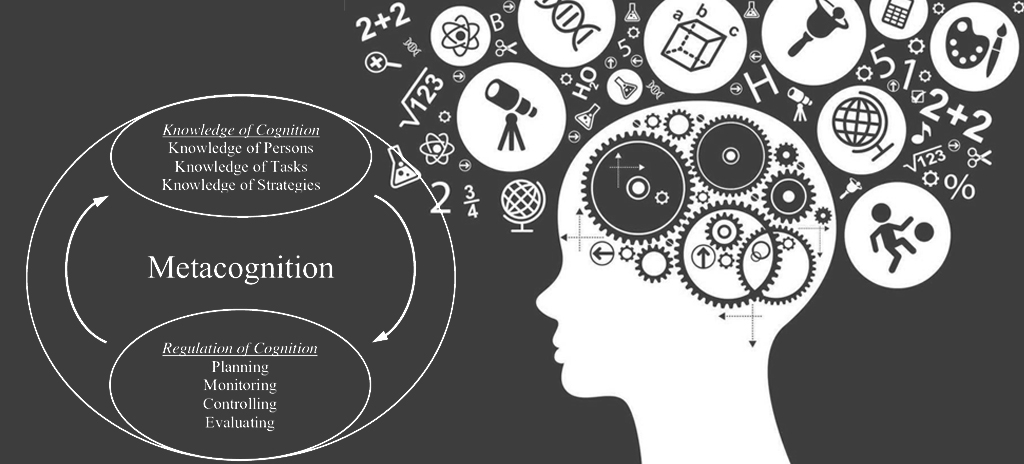
Simply put, Metacognition is "thinking about thinking."
It is the ability to step outside of your own brain and observe how you are learning. Instead of just doing a task, a metacognitive student asks: "Do I actually understand this, or am I just memorizing it?" and "Is this study method working, or am I wasting my time?"
It distinguishes between knowledge (knowing a fact) and understanding (knowing how you learned that fact and when to use it).
How It Works: The Manager in Your Brain
Think of your brain as a company.
Cognition is the worker. It does the math problem, reads the history chapter, or writes the essay.
Metacognition is the manager. It pauses the worker and asks, "Wait, we’ve read this paragraph three times and still don't get it. Let’s try watching a video instead."
Without the manager (Metacognition), the worker (Cognition) will just keep re-reading the confusing paragraph for an hour, wasting energy and getting frustrated.
Practical Usage: The 3-Step Cycle
You can implement metacognition in your daily study routine using this simple cycle:
1. Plan (Before you start): Don’t just open your book. Ask yourself: What is my goal here? How much time do I have? What strategies worked best for this subject last time?
2. Monitor (While you work): Pause every 15 minutes. Ask: Am I distracted? Is this making sense? If I had to teach this to a friend right now, could I do it? If the answer is no, stop and change your strategy.
3. Evaluate (After you finish): This is the most skipped step. Ask: What went well? What was confusing? What will I do differently next time?
Relevance for School Students
Why does this matter for your grades? Because school gets harder as you get older. In elementary school, rote memorization works. But in high school and beyond, the volume of information is too high to memorize. Metacognition allows you to learn faster because you stop wasting time on study methods that don't work for you. It transforms you from a passive learner (who waits for the teacher to explain) into an active learner (who knows how to teach themselves).
Metacognition helps you:
# Catch mistakes before they become habits
# Choose the right strategy for different subjects
# Stay organized while studying
# Reflect on what worked and what didn’t
# Become an independent learner
Practical Ways Students Can Use Metacognition
1. Think-Aloud Method
Speak your thoughts while solving a problem. This reveals your thinking patterns and errors.
2. Self-Questioning
Ask yourself:
“Does this remind me of something I already know?”
“Why am I choosing this method?”
“What could I do differently?”
3. Make a Study Strategy Card
Create a small card listing your best learning strategies (diagrams, examples, stories, practice tests). Use it before each study session.
4. Reflection Journal
Write three lines after studying:
What worked?
What didn’t?
What will I change tomorrow?
5. Peer Teaching
Teach a concept to a friend. If you struggle to explain it, it means your understanding needs strengthening. Teaching forces metacognition.
A Real-Life Example
Student A (Non-Metacognitive): Studies for a history test by reading the textbook over and over for 3 hours. They feel confident because they recognize the words. Result: They fail the test because they recognized the words but didn't understand the concepts.
Student B (Metacognitive): Starts reading. After 20 minutes, they pause (Monitor) and realize, "I’m reading, but I can't remember the dates." They stop reading and decide to make a timeline chart instead (Changing Strategy). After studying, they try to explain the war to their little brother (Evaluate). Result: They ace the test in less study time.
The Takeaway: Being smart isn't just about how much you know; it's about knowing how you know it. The next time you sit down to study, don't just be the sailor. Be the captain.
More from Curiosity Captain
Daydreaming is a Superpower
13 Dec 2025
Question Everything !!
13 Dec 2025
First Principles Thinking
13 Dec 2025

.png)